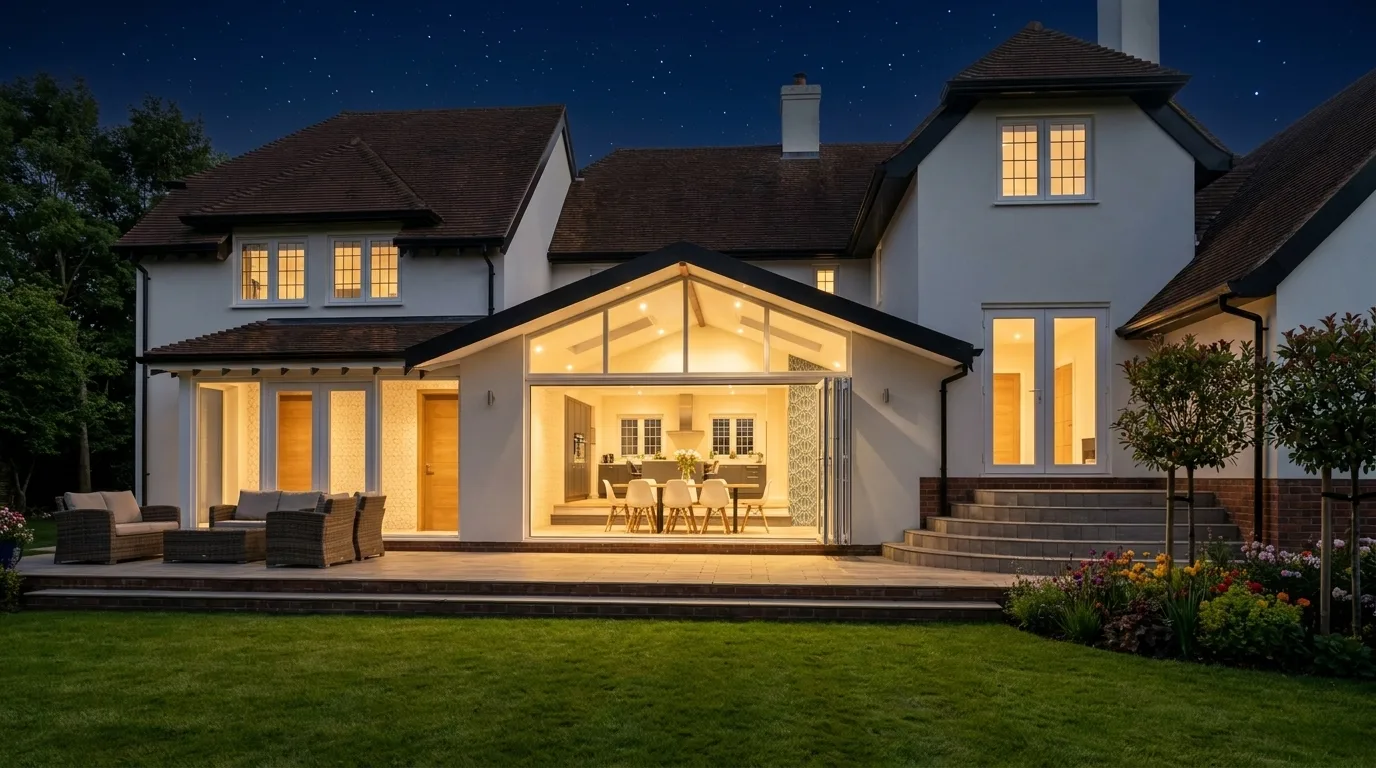
A good CGI doesn’t just decorate a planning application — it answers the questions an officer would otherwise have to imagine their way through. Scale, massing, materials, the relationship to neighbouring buildings: an accurate render settles all four at a glance.
Accuracy is the whole game
The difference between a persuasive planning CGI and a dismissed one is verifiability. If the image is built directly from the submitted drawings — same dimensions, same materials, same site levels — it carries evidential weight. If it’s an artist’s impression with flattering proportions and impossible light, an experienced officer will spot it, and it can actively harm your credibility.
Because our renders are built by RIBA-chartered architects from the same model as the drawings, the CGI and the elevations can’t disagree. That’s the point.
Where CGI earns its fee in planning
- Conservation areas and listed settings — showing that a contemporary extension defers to its context is nearly impossible in 2D. A render from the street viewpoint does it in one image.
- Contentious massing — a verified view from a neighbour’s aspect can defuse an objection before it’s written.
- Committee presentations — councillors are rarely trained drawing-readers. The scheme they can see is the scheme they can approve.
What to send us
The drawings you already have. If the scheme is in Revit or AutoCAD we work directly from your model; if it’s PDF or hand-drawn, we rebuild it accurately. Typical turnaround is 8–14 days, and the licence covers your planning submission and consultation materials.